

🚀 Automate your workflows with AI instruments! Uncover GetResponse AI-powered automation and save time!
Your organization is spending extra on automation than ever, but you’re barely seeing a return. It’s a irritating paradox revealed within the new “Enterprise automation index 2025” from Redwood Software program.
Whereas 73% of corporations elevated their automation spend final yr, lower than 30% are totally using their instruments. The info is obvious: the problem isn’t a scarcity of funding or know-how — it’s a cussed execution hole.
In a local weather the place each funds line is underneath the microscope, automation continues to be getting the inexperienced gentle. That’s as a result of the enterprise case is strong.
- 37% of organizations report that automation lowered prices by over 25%
- 43% have minimize handbook workloads by at the very least 1 / 4
- 49% say it elevated effectivity by the identical quantity
These are significant outcomes, however they’re not the norm. The info additionally reveals a widespread failure to scale.
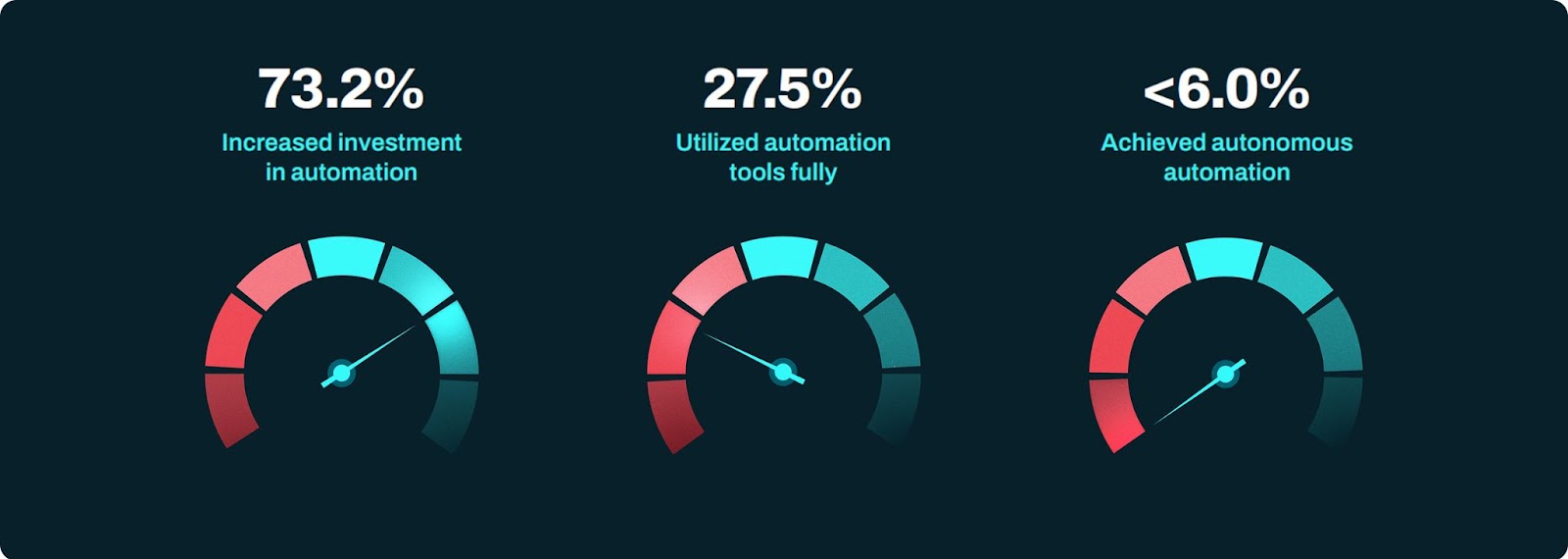
From the place I sit, working alongside enterprise groups on automation migration and orchestration day by day, I can inform you this isn’t a know-how situation. It’s a cussed execution hole.
The 4 traps of underperforming automation
Too many organizations deal with automation like an arms race, including new instruments to plug gaps and hoping for the very best. My group sees the results of this strategy every day, usually in these 4 traps:
- Advert hoc device sprawl: Advertising and marketing, Finance and IT all purchase their very own automation instruments, creating “shadow automation.” These siloed, ungoverned processes don’t share knowledge, comply with safety protocols or align with a bigger technique, undermining enterprise-wide visibility.
- Stopping on the activity stage: Groups typically automate the only, low-hanging fruit after which declare victory, ignoring the cross-functional processes the place the actual worth lies. This technical debt accrues till a important course of, like month-end shut or provide chain achievement, inevitably breaks, resulting in frantic, handbook interventions.
- Legacy tech dependency: Many enterprises nonetheless run their most vital processes on outdated schedulers or fundamental scripts. These instruments lack the visibility, error dealing with and safety features required for as we speak’s enterprise. After they fail (they usually do), the enterprise influence is fast and extreme, however migrating off them is perceived as too tough.
- No automation technique: With no plan to consolidate, migrate and optimize, the gathering of instruments turns into a digital junkyard. The group has technically invested in automation, however operationally, nothing has modified. The instruments are there, however they’re underutilized, misaligned or fully remoted.
These execution pitfalls are signs of a deeper situation, one which persistently derails even well-funded automation initiatives.
Complexity: The #1 blocker to automation ROI
In keeping with Redwood’s analysis, the highest problem isn’t funds, expertise or instruments — it’s complexity. Practically 20% of execs level to advanced workflows as their number-one barrier to scaling automation.
That echoes what I see within the area. Enterprises are sitting on a long time of customized scripts, legacy structure, fragile integrations and undocumented processes. And each time somebody says “We’ll automate that later,” the mess grows.
Whenever you delay migration or fail to redesign round orchestration, you lose the power to scale. You automate the straightforward stuff and stall out on the first signal of friction. If you need automation to ship, you have to:
- Standardize earlier than you automate. Don’t simply pave the trail. A chaotic handbook course of will solely grow to be a quicker chaotic automated course of. Take the time to map, simplify and standardize workflows first. This preliminary funding pays dividends in scalability and resilience.
- Migrate strategically. A easy “lift-and-shift” of outdated jobs to a brand new platform simply strikes the issue. Strategic migration includes analyzing, consolidating and redesigning workflows to take full benefit of a contemporary orchestration platform’s capabilities.
- Orchestrate throughout techniques. True worth is unlocked once you handle processes finish to finish, from the mainframe to the cloud and throughout all functions. This breaks down the silos between IT operations, knowledge pipelines and enterprise functions, which the report identifies as a key problem for industries like finance.
- Align to enterprise outcomes. The purpose isn’t simply to run jobs efficiently; it’s to cut back prices, speed up innovation and enhance knowledge visibility — the highest three enterprise priorities cited within the analysis. Body each automation initiative round these objectives.
The trail to mature automation: A name to motion
In case your automation funding isn’t delivering, it’s a important warning signal. Don’t fall into the entice of merely including extra instruments. The trail ahead requires a shift in mindset: give attention to orchestration, elevate automation to a C-suite precedence and construct a cohesive technique. It’s the one solution to rework it from a tactical repair to a real development lever to your total group.
Obtain the complete report to get:
- Automation maturity benchmarks throughout industries
- Obstacles and drivers of automation success
- What separates prime performers from the remaining
- Steering for aligning automation with enterprise objectives
🔥 Supercharge your enterprise productiveness → attempt CustomGPT for customized AI brokers as we speak!

