

🤖 Enhance your productiveness with AI! Discover Quso: all-in-one AI social media suite for sensible automation.
Key takeaways
- Async e mail communication lets you reply when it suits your workflow relatively than instantly, defending deep work time whereas sustaining workforce responsiveness
- E-mail batching (checking 2-3 occasions day by day) can save practically 4 hours of focus restoration time in comparison with steady monitoring
- Establishing express response time expectations by channel eliminates the false urgency that causes stress and context switching
- Utilizing asynchronous communication instruments like Superhuman Mail helps groups reply 1-2 days sooner and course of twice as many emails
- A proper communication constitution framework ensures everybody understands when to make use of e mail vs. chat vs. synchronous strategies
You are drowning in e mail. Once more. Information staff obtain 117 emails and 153 Groups messages every day, consuming 28% of your workweek whilst you wrestle to make time for strategic work.
The vast majority of workforce communication now occurs by way of asynchronous channels like e mail. However most leaders nonetheless deal with e mail like an emergency response system, continually checking and instantly responding to each message.
This information reveals you the best way to set expectations that shield your focus time whereas sustaining responsiveness. You will be taught what asynchronous communication is, see sensible asynchronous communication examples, and uncover the best way to implement programs that remodel e mail from a productiveness drain right into a strategic benefit.
What’s asynchronous communication?
Asynchronous communication refers to any type of communication the place contributors do not have to be current or reply on the similar time. In contrast to synchronous communication (akin to cellphone calls, video conferences, or in-person conversations) that calls for on the spot consideration, asynchronous strategies allow you to reply when it suits your workflow.
E-mail is the commonest asynchronous communication instance within the office. Different asynchronous communication instruments embody mission administration platforms, recorded video messages, shared paperwork, and messaging apps when used with out real-time expectations.
Synchronous communication examples:
- Telephone calls
- Video conferences
- In-person conferences
- Reside chat with speedy responses anticipated
Asynchronous communication examples:
- Undertaking administration feedback
- Recorded video updates
- Shared doc collaboration
- Slack/Groups messages (when not anticipating speedy replies)
The important thing distinction between asynchronous communication vs synchronous communication lies in timing flexibility. Synchronous strategies require simultaneous participation, whereas asynchronous strategies enable every particular person to have interaction on their very own schedule.
The actual price of unoptimized e mail
The amount is substantial. The common workplace employee receives 120+ emails day by day.
Context switching amplifies the drain. Checking e mail 10 occasions day by day leads to practically 4 hours of focus restoration time. Each time you examine your inbox, your mind wants roughly 23 minutes to totally refocus on deep work.
The enterprise danger is actual: 38% of staff indicated that e mail fatigue may cause them to give up their jobs.
Asynchronous communication advantages
Earlier than diving into practices, it is value understanding why asynchronous communication know-how has turn out to be important for contemporary groups:
- Flexibility throughout time zones: Distant and distributed groups can collaborate successfully with out scheduling conflicts or requiring anybody to work outdoors regular hours.
- Higher high quality responses: When folks have time to suppose earlier than responding, they typically present extra considerate, well-researched solutions.
- Documentation built-in: Asynchronous communication creates automated data of choices, discussions, and knowledge sharing.
- Decreased assembly fatigue: Groups can deal with many discussions asynchronously that may in any other case require yet one more assembly.
- Improved focus time: With out fixed interruptions for synchronous conversations, staff can have interaction in deep work.
5 practices that remodel async e mail communication
1. Set express expectations and context
You ship an e mail at 2 am since you’re awake and fascinated with a mission. Your workforce member sees it at 7 am and panics, abandoning their deliberate deep work session to answer.
This occurs continually as a result of recipients assume messages want quicker responses than senders count on. The answer: state response deadlines explicitly.
As a substitute of: “Are you able to evaluate this proposal?”
Write: “Please evaluate this proposal by Friday at 3 pm. No rush on this.”
For these 2 am emails, add: “I am sending this at 2 am as a result of I am awake, however I do not count on a response till regular enterprise hours.” Or schedule them for enterprise hours.
Superhuman Mail’s Good Ship analyzes when recipients usually have interaction and delivers messages at optimum occasions mechanically.
Set up team-wide norms, too. For instance: “We reply to emails inside 24 hours, Slack/Groups inside 2 hours, however for true emergencies, we use textual content or cellphone calls.”
2. Select communication modes strategically
Most professionals talk mindlessly, defaulting to no matter communication channel they used final or persevering with limitless e mail conversations with out contemplating if it is the correct instrument.
Async e mail communication works finest for:
- Early-stage brainstorming: Ten folks can concurrently kind 20 concepts within the time it will take to hearken to 200 concepts spoken aloud in a gathering.
- Standing updates and documentation: Weekly summaries, mission updates, and FYI messages work completely with out synchronous follow-up.
- Preliminary outreach: Chilly emails and introductions profit from asynchronous codecs.
Swap to synchronous communication for decision-making and refinement, or when e mail threads lengthen past a number of exchanges.
3. Prioritize frequency over richness for relationships
Most individuals suppose face-to-face interplay is at all times superior for constructing skilled relationships. Communication frequency issues greater than communication richness for sustaining sturdy relationships.
Take into consideration two mates: one you see in particular person each three to 4 months, one other you textual content each single day. Which good friend are you nearer to? Most everybody would say the one you textual content every single day.
For leaders: Schedule temporary, common asynchronous check-ins relatively than rare, prolonged conferences.
Superhuman Mail’s Cut up Inbox mechanically organizes your e mail into targeted sections, so you possibly can batch-process all of your workforce check-ins in a single session.
4. Set up e mail protocols to eradicate back-and-forth
Most e mail creates limitless back-and-forth exchanges that would have been resolved in a single message. Cal Newport developed a protocol system that eliminates this waste.
As a substitute of: “Can we schedule our Q1 evaluate?” (which triggers a number of clarifying exchanges), use this strategy:
“Objective: Schedule Q1 evaluate. Course of: Reply with 3 home windows by Friday. I will verify inside 24 hours.”
This single message accomplishes what usually requires 4-6 exchanges.
Superhuman Mail’s Snippets characteristic makes this sensible for groups. Create reusable templates for frequent protocols that your workforce can entry immediately.
5. Observe e mail batching
E-mail batching 2-3 occasions day by day saves vital time in comparison with steady monitoring. Set designated e mail processing occasions and shut your e mail consumer utterly outdoors these home windows.
The crucial part: leaders should mannequin this habits. Your e mail habits set workforce norms. In case you batch however count on speedy responses from others, the system fails.
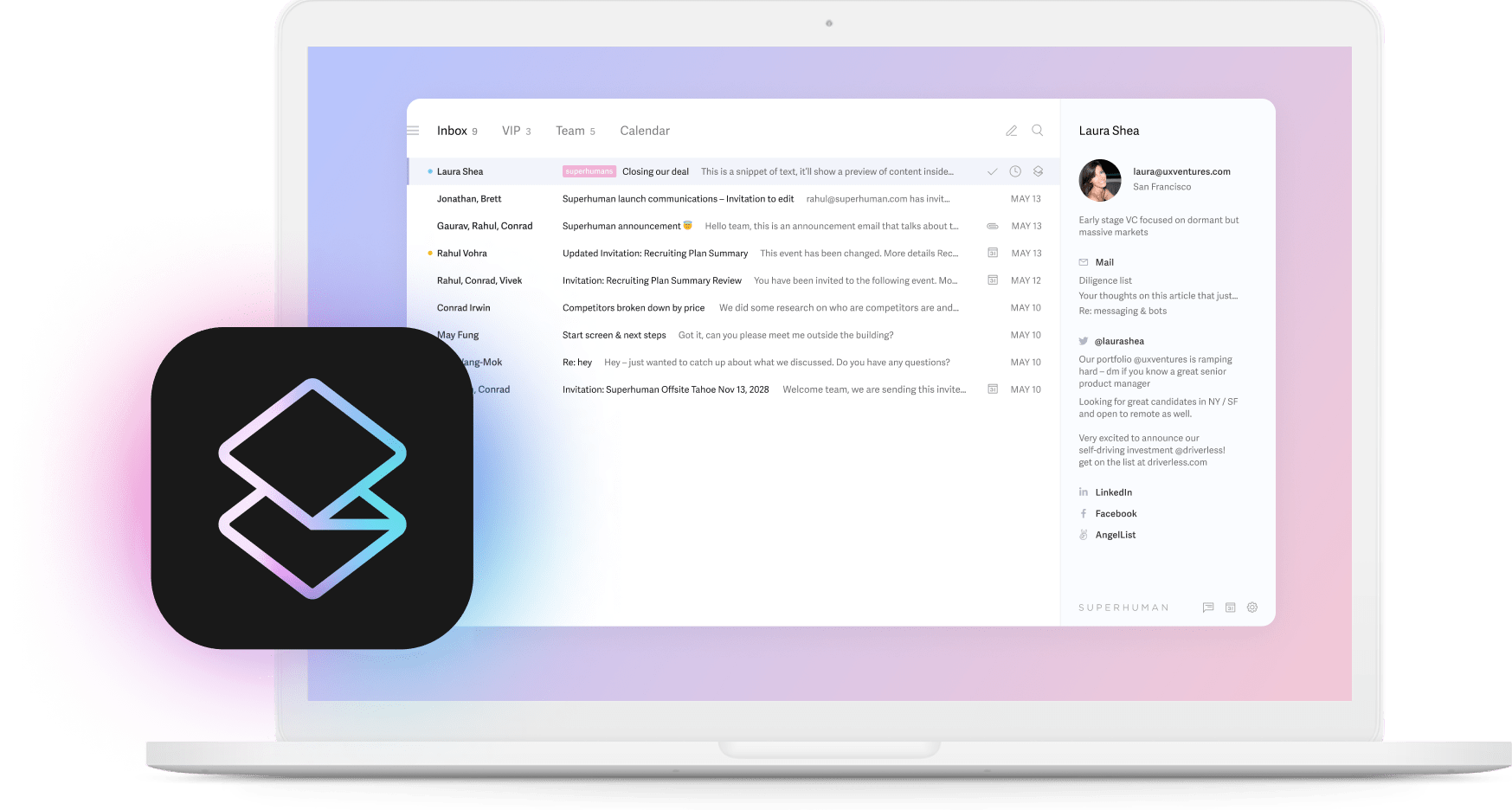
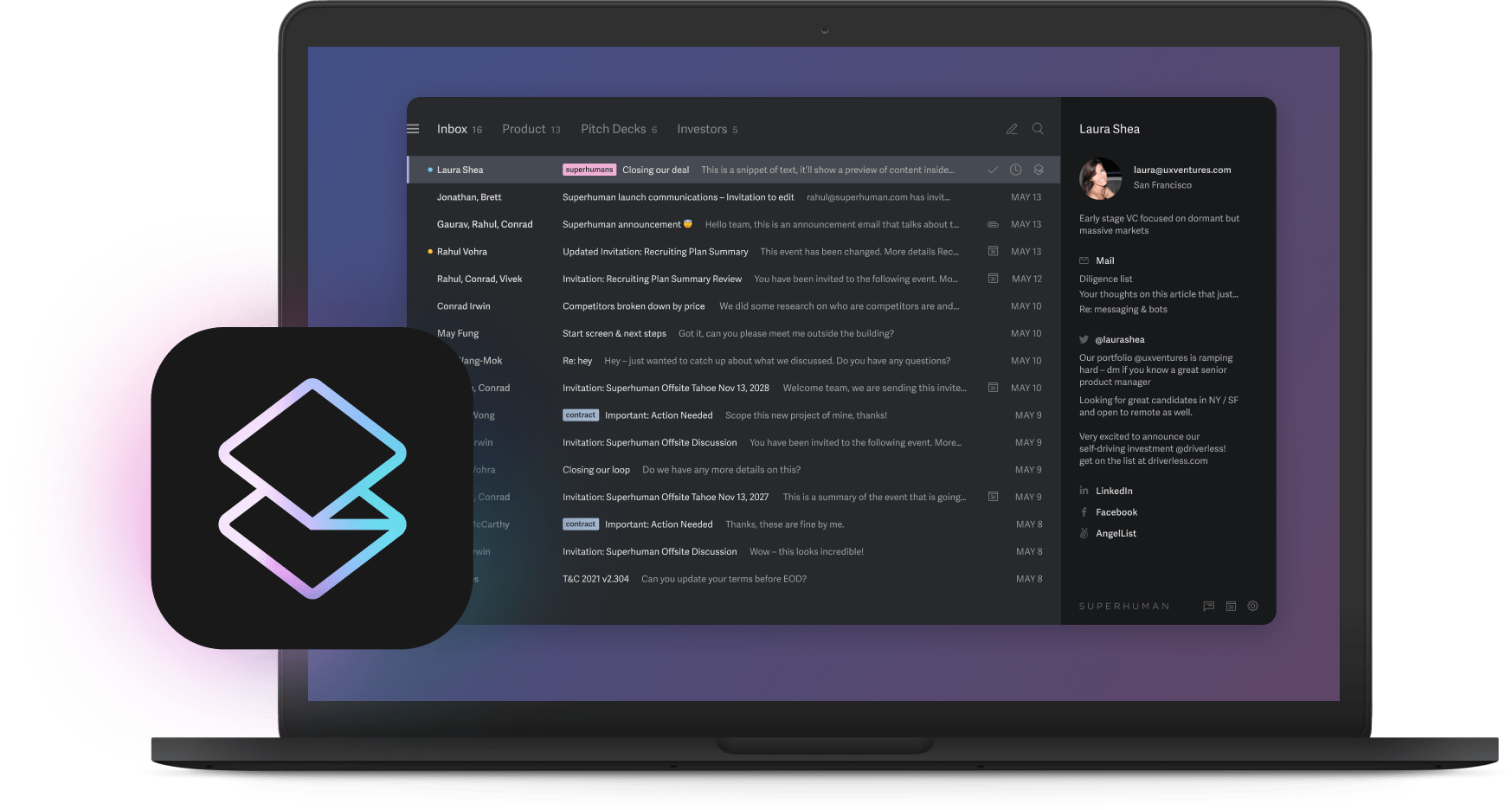
Superhuman Mail helps groups reply quicker and course of twice as many emails utilizing instruments like Instantaneous Reply and keyboard shortcuts that eradicate mouse dependency.
Efficient async e mail communication requires the correct instruments:
- E-mail shoppers: Superhuman Mail, Gmail, Outlook, with options like scheduling, templates, and AI help
- Undertaking administration: Asana, Monday.com, Trello for task-tied discussions
- Video messaging: Loom for asynchronous video updates
- Documentation: Notion, Confluence, Google Docs for collaborative writing
- Messaging platforms: Slack, Microsoft Groups, when used with response time expectations
For groups utilizing async e mail communication on Android, iOS, or desktop, Superhuman Mail offers a constant expertise throughout platforms.
The communication constitution framework
Most firms lack formal e mail insurance policies. It is a hole you possibly can fill.
Create a one-page e mail coverage with workforce enter relatively than mandating top-down.
Outline tool-specific boundaries: E-mail for one-way updates and documentation, chat platforms for fast clarifications, and video requires advanced selections requiring real-time dialogue.
Set response time expectations by channel: pressing (response inside 4 hours throughout enterprise hours), normal (response inside 24 hours), and FYI updates (no response required).
Body tips as protections, not restrictions. Say “You do not have to answer after hours” versus “Do not ship emails after hours.”
Widespread challenges and options
- Lack of speedy clarification: Be deliberate and clear in written communication. Entrance-load messages with mandatory context. When complexity emerges, change to synchronous strategies instantly.
- Time zone coordination: Doc selections totally so colleagues in several time zones can catch up. Use shared calendars to point working hours.
- Info overload: Use clear topic strains, set up tagging conventions, and leverage instruments that assist prioritize incoming messages.
Implementation roadmap
Week 1: Create a one-page e mail coverage with workforce enter, outline response time expectations by urgency stage and channel
Week 2: Schedule company-wide focus blocks with express email-free home windows, implement e mail protocol system
Week 3: Consider Superhuman Mail for AI-native e mail, create workforce snippet library
Week 4: Evaluation and refine primarily based on workforce suggestions
The ROI case for transformation
For a 100-person group averaging $100,000 compensation, 28% of time spent managing e mail equals $2.8M in annual compensation. Recovering simply 25% by way of batching and lowered context switching delivers $700K in productiveness positive aspects.
Rework your async e mail communication
Async e mail communication is a big a part of office interplay. Optimizing this dominant communication mode delivers outsized returns in comparison with optimizing conferences or different synchronous channels.
The transformation requires three built-in elements: establishing express workforce norms about response expectations, investing in complete preliminary communications to reduce back-and-forth cycles, and strategically utilizing synchronous communication for advanced conditions.
Superhuman Mail is what e mail ought to have been all alongside. Groups reply 1-2 days sooner, course of twice as many emails, and save 4 hours per particular person each week. Rework your async e mail communication from a productiveness drain into your aggressive benefit: reclaim 2+ hours day by day by way of e mail batching and recuperate 127 hours yearly from lowered context switching.
Superhuman Mail is the most efficient e mail app ever made, serving to groups fly by way of their inbox and make e mail really feel good once more. Strive Superhuman Mail right now!
Regularly requested questions
What’s an asynchronous e mail?
An asynchronous e mail is any e mail that does not require a right away response. In contrast to cellphone calls or video conferences the place each events should be current concurrently, asynchronous e mail permits the sender to compose a message at their comfort and the recipient to learn and reply when it suits their schedule.
What’s async communication?
Async communication (brief for asynchronous communication) refers to any change of data the place contributors do not have to be current on the similar time. This contains e mail, recorded video messages, mission administration feedback, shared paperwork, and messaging apps when used with out speedy response expectations.
What are examples of asynchronous communication?
Widespread asynchronous communication examples embody:
- E-mail exchanges
- Feedback in mission administration instruments (Asana, Trello, Monday.com)
- Recorded video messages (Loom, Vidyard)
- Shared paperwork with feedback (Google Docs, Notion)
- Textual content messages with out speedy response expectations
- Dialogue boards and inner wikis
- Pre-recorded coaching movies
Is an e mail an instance of asynchronous communication?
Sure, e mail is the quintessential instance of asynchronous communication in skilled settings. If you ship an e mail, you do not count on the recipient to learn and reply instantly. They obtain your message and may select when to have interaction with it primarily based on their very own priorities and schedule.
Why use asynchronous messaging?
Groups use asynchronous messaging as a result of it provides vital advantages:
- Flexibility: Group members can reply after they’re most efficient
- Higher responses: Individuals have time to suppose and analysis earlier than replying
- Time zone pleasant: Distributed groups can collaborate with out requiring anybody to work odd hours
- Documentation: Asynchronous conversations create automated data
- Decreased interruptions: Fewer real-time calls for means extra deep work time
- Inclusivity: Introverts and people who want processing time can contribute equally
Cut back distractions and save 4+ hours each week with Superhuman!
Keyboard shortcuts, Undo ship, AI triage, Reminders, Lovely design
🚀 Degree up your duties with GetResponse AI-powered instruments to streamline your workflow!

