

🚀 Able to supercharge your AI workflow? Attempt ElevenLabs for AI voice and speech technology!
On this article, you’ll be taught sensible methods for constructing helpful machine studying options when you might have restricted compute, imperfect knowledge, and little to no engineering help.
Subjects we’ll cowl embody:
- What “low-resource” actually seems to be like in follow.
- Why light-weight fashions and easy workflows usually outperform complexity in constrained settings.
- Easy methods to deal with messy and lacking knowledge, plus easy switch studying methods that also work with small datasets.
Let’s get began.

Constructing Good Machine Studying in Low-Useful resource Settings
Picture by Creator
Most individuals who wish to construct machine studying fashions wouldn’t have highly effective servers, pristine knowledge, or a full-stack workforce of engineers. Particularly if you happen to stay in a rural space and run a small enterprise (or you might be simply beginning out with minimal instruments), you in all probability wouldn’t have entry to many sources.
However you’ll be able to nonetheless construct highly effective, helpful options.
Many significant machine studying tasks occur in locations the place computing energy is proscribed, the web is unreliable, and the “dataset” seems to be extra like a shoebox filled with handwritten notes than a Kaggle competitors. However that’s additionally the place a few of the most intelligent concepts come to life.
Right here, we’ll speak about learn how to make machine studying work in these environments, with classes pulled from real-world tasks, together with some sensible patterns seen on platforms like StrataScratch.

What Low-Useful resource Actually Means
In abstract, working in a low-resource setting possible seems to be like this:
- Outdated or sluggish computer systems
- Patchy or no web
- Incomplete or messy knowledge
- A one-person “knowledge workforce” (in all probability you)
These constraints may really feel limiting, however there may be nonetheless a number of potential in your options to be sensible, environment friendly, and even revolutionary.
Why Light-weight Machine Studying Is Really a Energy Transfer
The reality is that deep studying will get a number of hype, however in low-resource environments, light-weight fashions are your finest pal. Logistic regression, choice bushes, and random forests could sound old-school, however they get the job completed.
They’re quick. They’re interpretable. They usually run superbly on fundamental {hardware}.
Plus, once you’re constructing instruments for farmers, shopkeepers, or group employees, readability issues. Individuals must belief your fashions, and easy fashions are simpler to elucidate and perceive.
Widespread wins with basic fashions:
- Crop classification
- Predicting inventory ranges
- Tools upkeep forecasting
So, don’t chase complexity. Prioritize readability.
Turning Messy Information into Magic: Characteristic Engineering 101
In case your dataset is slightly (or so much) chaotic, welcome to the membership. Damaged sensors, lacking gross sales logs, handwritten notes… we’ve all been there.
Right here’s how one can extract which means from messy inputs:
1. Temporal Options
Even inconsistent timestamps may be helpful. Break them down into:
- Day of week
- Time since final occasion
- Seasonal flags
- Rolling averages
2. Categorical Grouping
Too many classes? You’ll be able to group them. As an alternative of monitoring each product identify, strive “perishables,” “snacks,” or “instruments.”
3. Area-Based mostly Ratios
Ratios usually beat uncooked numbers. You’ll be able to strive:
- Fertilizer per acre
- Gross sales per stock unit
- Water per plant
4. Strong Aggregations
Use medians as a substitute of means to deal with wild outliers (like sensor errors or data-entry typos).
5. Flag Variables
Flags are your secret weapon. Add columns like:
- “Manually corrected knowledge”
- “Sensor low battery”
- “Estimate as a substitute of precise”
They offer your mannequin context that issues.
Lacking Information?
Lacking knowledge could be a drawback, however it isn’t at all times. It may be data in disguise. It’s vital to deal with it with care and readability.
Deal with Missingness as a Sign
Generally, what’s not stuffed in tells a narrative. If farmers skip sure entries, it’d point out one thing about their scenario or priorities.
Keep on with Easy Imputation
Go together with medians, modes, or forward-fill. Fancy multi-model imputation? Skip it in case your laptop computer is already wheezing.
Use Area Information
Area consultants usually have sensible guidelines, like utilizing common rainfall throughout planting season or identified vacation gross sales dips.
Keep away from Advanced Chains
Don’t attempt to impute all the pieces from all the pieces else; it simply provides noise. Outline a number of strong guidelines and keep on with them.
Small Information? Meet Switch Studying
Right here’s a cool trick: you don’t want huge datasets to learn from the massive leagues. Even easy types of switch studying can go a good distance.
Textual content Embeddings
Bought inspection notes or written suggestions? Use small, pretrained embeddings. Massive good points with low price.
World to Native
Take a worldwide weather-yield mannequin and regulate it utilizing a number of native samples. Linear tweaks can do wonders.
Characteristic Choice from Benchmarks
Use public datasets to information what options to incorporate, particularly in case your native knowledge is noisy or sparse.
Time Sequence Forecasting
Borrow seasonal patterns or lag buildings from world traits and customise them in your native wants.
A Actual-World Case: Smarter Crop Selections in Low-Useful resource Farming
A helpful illustration of light-weight machine studying comes from a StrataScratch undertaking that works with actual agricultural knowledge from India.

The aim of this undertaking is to advocate crops that match the precise circumstances farmers are working with: messy climate patterns, imperfect soil, all of it.
The dataset behind it’s modest: about 2,200 rows. However it covers vital particulars like soil vitamins (nitrogen, phosphorus, potassium) and pH ranges, plus fundamental local weather data like temperature, humidity, and rainfall. Here’s a pattern of the information:

As an alternative of reaching for deep studying or different heavy strategies, the evaluation stays deliberately easy.
We begin with some descriptive statistics:
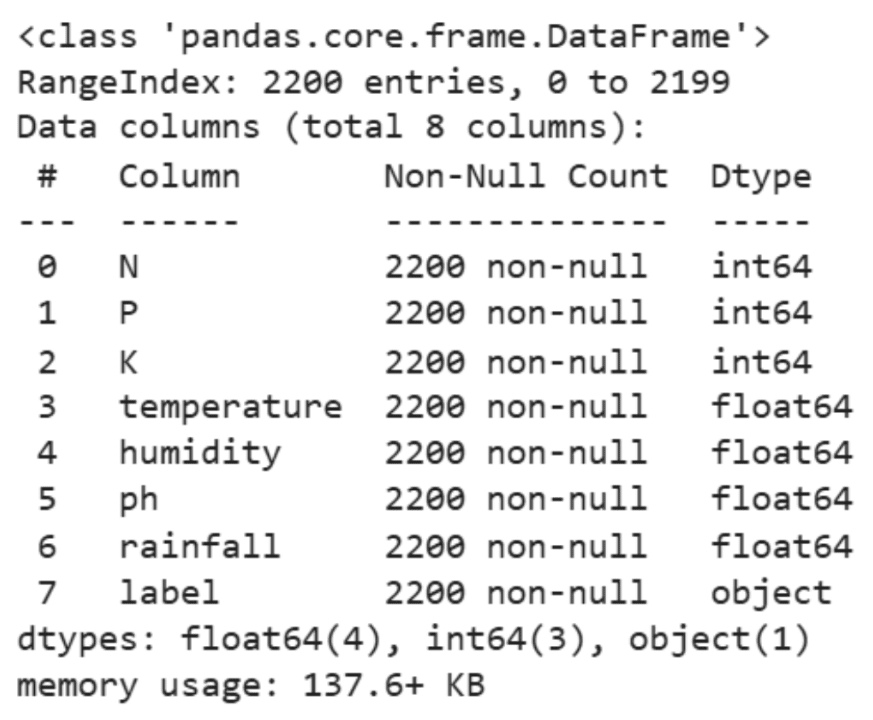
|
df.select_dtypes(embody=[‘int64’, ‘float64’]).describe() |

Then, we proceed to some visible exploration:
|
1 2 3 4 5 6 7 8 9 10 11 12 13 14 15 16 17 18 19 20 |
# Setting the aesthetic type of the plots sns.set_theme(type=“whitegrid”)
# Creating visualizations for Temperature, Humidity, and Rainfall fig, axes = plt.subplots(1, 3, figsize=(14, 5))
# Temperature Distribution sns.histplot(df[‘temperature’], kde=True, coloration=“skyblue”, ax=axes[0]) axes[0].set_title(‘Temperature Distribution’)
# Humidity Distribution sns.histplot(df[‘humidity’], kde=True, coloration=“olive”, ax=axes[1]) axes[1].set_title(‘Humidity Distribution’)
# Rainfall Distribution sns.histplot(df[‘rainfall’], kde=True, coloration=“gold”, ax=axes[2]) axes[2].set_title(‘Rainfall Distribution’)
plt.tight_layout() plt.present() |

Lastly, we run a number of ANOVA assessments to know how environmental elements differ throughout crop varieties:
ANOVA Evaluation for Humidity
|
# Outline crop_types primarily based in your DataFrame ‘df’ crop_types = df[‘label’].distinctive()
# Getting ready an inventory of humidity values for every crop kind humidity_lists = [df[df[‘label’] == crop][‘humidity’] for crop in crop_types]
# Performing the ANOVA take a look at for humidity anova_result_humidity = f_oneway(*humidity_lists)
anova_result_humidity |

ANOVA Evaluation for Rainfall
|
# Outline crop_types primarily based in your DataFrame ‘df’ if not already outlined crop_types_rainfall = df[‘label’].distinctive()
# Getting ready an inventory of rainfall values for every crop kind rainfall_lists = [df[df[‘label’] == crop][‘rainfall’] for crop in crop_types_rainfall]
# Performing the ANOVA take a look at for rainfall anova_result_rainfall = f_oneway(*rainfall_lists)
anova_result_rainfall |

ANOVA Evaluation for Temperature
|
# Guarantee crop_types is outlined out of your DataFrame ‘df’ crop_types_temp = df[‘label’].distinctive()
# Getting ready an inventory of temperature values for every crop kind temperature_lists = [df[df[‘label’] == crop][‘temperature’] for crop in crop_types_temp]
# Performing the ANOVA take a look at for temperature anova_result_temperature = f_oneway(*temperature_lists)
anova_result_temperature |

This small-scale, low-resource undertaking mirrors real-life challenges in rural farming. Everyone knows that climate patterns don’t comply with guidelines, and local weather knowledge may be patchy or inconsistent. So, as a substitute of throwing a fancy mannequin on the drawback and hoping it figures issues out, we dug into the information manually.
Maybe essentially the most helpful side of this strategy is its interpretability. Farmers should not searching for opaque predictions; they need steering they’ll act on. Statements like “this crop performs higher underneath excessive humidity” or “that crop tends to desire drier circumstances” translate statistical findings into sensible choices.
This complete workflow was tremendous light-weight. No fancy {hardware}, no costly software program, simply trusty instruments like pandas, Seaborn, and a few fundamental statistical assessments. All the pieces ran easily on a daily laptop computer.
The core analytical step used ANOVA to examine whether or not environmental circumstances reminiscent of humidity or rainfall differ considerably between crop varieties.
In some ways, this captures the spirit of machine studying in low-resource environments. The strategies stay grounded, computationally mild, and simple to elucidate, but they nonetheless supply insights that may assist individuals make extra knowledgeable choices, even with out superior infrastructure.
For Aspiring Information Scientists in Low-Useful resource Settings
You may not have a GPU. You is likely to be utilizing free-tier instruments. And your knowledge may appear to be a puzzle with lacking items.
However right here’s the factor: you’re studying abilities that many overlook:
- Actual-world knowledge cleansing
- Characteristic engineering with intuition
- Constructing belief via explainable fashions
- Working sensible, not flashy
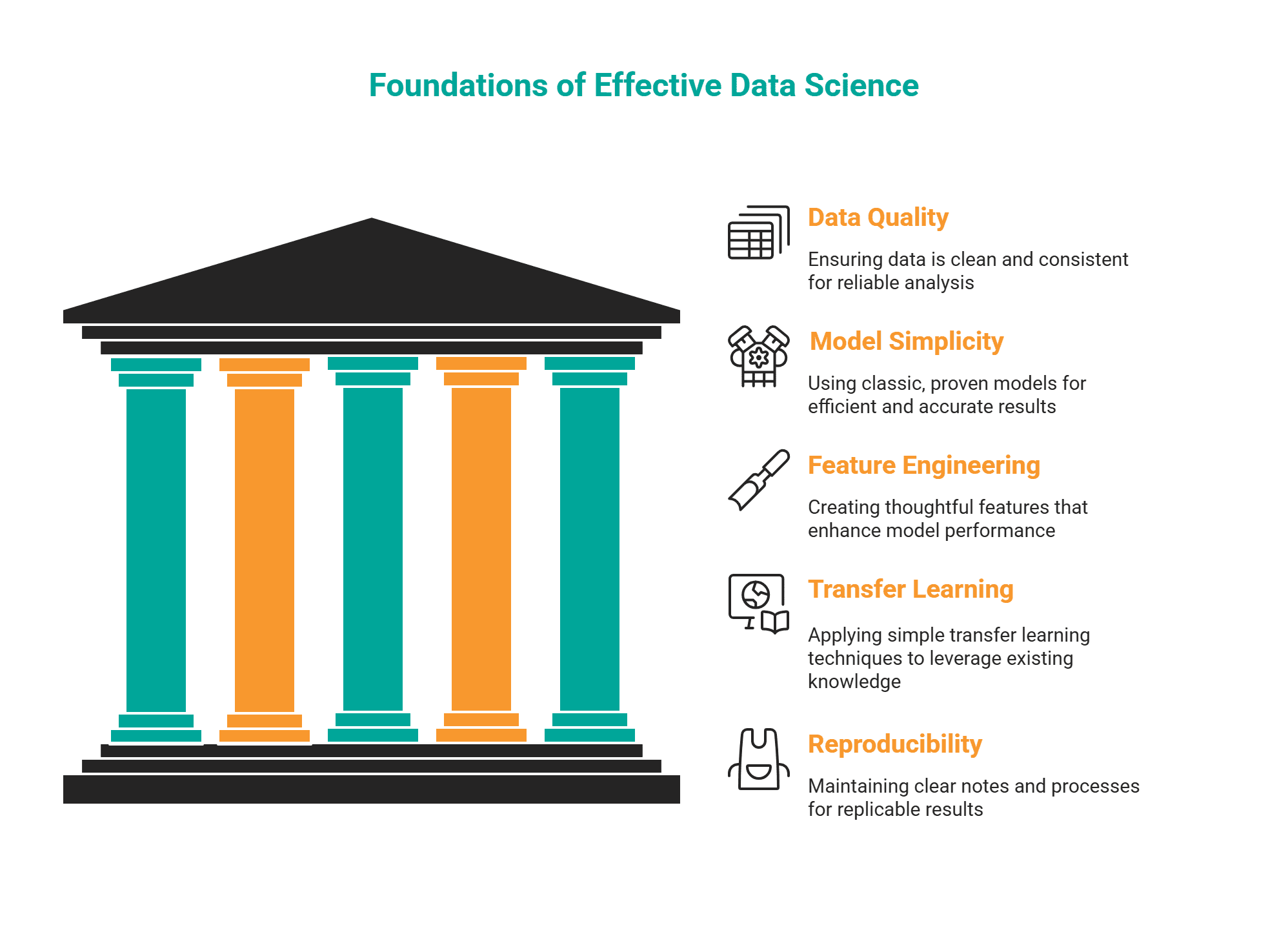
Prioritize this:
- Clear, constant knowledge
- Traditional fashions that work
- Considerate options
- Easy switch studying methods
- Clear notes and reproducibility
In the long run, that is the type of work that makes an awesome knowledge scientist.
Conclusion
Picture by Creator
Working in low-resource machine studying environments is feasible. It asks you to be artistic and keen about your mission. It comes all the way down to discovering the sign within the noise and fixing actual issues that make life simpler for actual individuals.
On this article, we explored how light-weight fashions, sensible options, sincere dealing with of lacking knowledge, and intelligent reuse of present information may also help you get forward when working in such a scenario.
What are your ideas? Have you ever ever constructed an answer in a low-resource setup?
🔥 Need one of the best instruments for AI advertising? Try GetResponse AI-powered automation to spice up your enterprise!

