

🤖 Increase your productiveness with AI! Discover Quso: all-in-one AI social media suite for sensible automation.
You are in a gathering when somebody asks if anybody has responded to the shopper but. Three individuals say sure. One other individual says they despatched a follow-up in Slack. Another person forwarded the thread by way of e-mail. No one’s certain which response went out first or what precisely obtained stated.
This occurs as a result of groups deal with Slack and e-mail as competing instruments somewhat than complementary ones. The query is not which platform to decide on however when to make use of every. When used deliberately, Slack can scale back e-mail quantity by 32% and conferences by 27%, whereas e-mail stays important for exterior stakeholders and formal communication.
The true problem is creating a transparent determination framework that your total crew can observe. By asking your self questions like who is that this for? What do you want again? How vital is it? How rapidly do you want a response? you possibly can maximize the affect of each message.
Understanding Slack and e-mail: core variations
Slack is finest for real-time, team-based communication and pressing issues. It excels at fast discussions, mission collaboration, and integrations, making a extra agile surroundings for inside groups.
E mail is best for formal, longer-form, and documented messages that aren’t time-sensitive. It is very best for official record-keeping, speaking with exterior events, and messages that require cautious consideration earlier than a response.
With 4.7 billion e-mail customers globally, e-mail works throughout all organizations with out requiring particular accounts, whereas Slack connects your inside crew by way of channels, threads, and integrations with 1000’s of apps.
Slack vs e-mail: function comparability
Slack: professionals and cons
Deciding if or when to make use of Slack begins by understanding its strengths and weaknesses. Listed below are some professionals and cons of Slack you must remember.
Benefits of Slack
- Actual-time collaboration and quicker problem-solving: Groups resolve points quicker than email-based communication. If you want fast solutions or instant suggestions, Slack’s real-time nature excels.
- Clear communication builds shared information: With the vast majority of messages in public channels, info flows brazenly. Anybody can search previous discussions and keep knowledgeable with out express inclusion, decreasing info silos.
- Channel-based group: Devoted areas for initiatives and matters hold conversations organized. Channels will be public, personal, or shared with exterior companions, with threaded conversations decreasing info overload.
- Wealthy integration ecosystem: Join your instruments on to Slack for seamless workflows. Obtain notifications, handle duties, and take actions with out fixed context switching.
Disadvantages of Slack
- Restricted message historical past on free plans: Solely 90-day message retention means dialog historical past and information disappear except you improve.
- Notification overload: Fixed notifications interrupt targeted work. The vast majority of customers commonly allow Do Not Disturb mode to guard focus time.
- Data can change into chaotic: With out clear tips, a number of concurrent conversations create confusion. Channels multiply, discussions scatter, and vital messages get buried.
- Designed for fixed checking: Like social media, Slack’s design encourages frequent checking that fragments consideration and makes deep work troublesome.
- Not appropriate for exterior communication: Whereas shared channels exist, e-mail stays the usual for purchasers, distributors, and exterior companions.
E mail: professionals and cons
E mail additionally has its good and unhealthy sides. Let’s take a look at its professionals and cons.
Benefits of E mail
- True asynchronous communication: E mail’s totally asynchronous nature works completely for globally distributed groups. Ship messages in your schedule; recipients reply on theirs, no matter time zones.
- Common accessibility: E mail works throughout all organizations and platforms. Anybody with an e-mail handle can talk with anybody else with out particular accounts.
- Everlasting record-keeping: E mail messages persist indefinitely, creating complete documentation essential for compliance, authorized necessities, and organizational reminiscence.
- Works for inside and exterior communication: The identical device bridges crew updates and shopper correspondence, eliminating platform switching primarily based on recipient.
- Formal {and professional}: E mail’s format makes it applicable for official bulletins, efficiency critiques, contracts, and coverage communications requiring clear documentation.
Disadvantages of E mail
- Creates collaboration silos: E mail threads are personal, making crew collaboration troublesome and stopping new individuals from accessing full context.
- Gradual response instances: E mail’s asynchronous nature can bottleneck selections when fast consensus or speedy problem-solving is required.
- Inbox overload: Essential messages get buried amongst a whole lot of emails, newsletters, and notifications.
- Lengthy messages typically ignored: 57% of individuals skip emails longer than 8 sentences, that means detailed info typically goes unread. Fashionable AI-native e-mail instruments now resolve this with computerized summaries that floor key factors from prolonged conversations. You get the context you want in seconds with out scrolling by way of dozens of messages.
When to make use of Slack vs e-mail
You want a call framework to resolve which communication device to make use of. The choice needs to be a no brainer because you already know what every device excels at.
Use Slack when:
- Actual-time collaboration is required: Select Slack for speedy back-and-forth exchanges requiring instant suggestions or coordination.
- Fast questions requiring quick solutions: Simple questions with easy solutions get speedy decision with out e-mail’s formality and delay.
- The “1-hour check”—response wanted inside an hour: In the event you want a response inside 60 minutes, Slack is sort of at all times the higher alternative.
- Transparency advantages the crew: When info needs to be seen to a number of crew members or future crew members would possibly want context, public channels create shared information.
- Pressing points want instant consideration: For real urgencies—manufacturing outages, important shopper points, time-sensitive selections—Slack’s notifications guarantee quick visibility.
- Mission-specific discussions: Groups want persistent, searchable areas the place everybody can see updates and contribute as wanted.
Use e-mail when:
- Exterior communication is required: Shoppers, distributors, companions, and anybody exterior your group.
- Formal documentation is required: Efficiency critiques, contracts, coverage modifications, authorized issues, or official bulletins requiring permanence.
- Messages are lengthy or complicated: Detailed proposals, complete updates, or info requiring cautious studying and reference.
- Cross-timezone coordination is important: When crew members work throughout considerably totally different time zones and synchronous communication is impractical.
- You want a everlasting document: Data that should be archived for compliance, authorized, or historic functions.
- Response time is not pressing: When you possibly can wait 24 hours or extra for a response.
Slack vs E mail: finest practices
Communication etiquette exists in each e-mail and Slack. Right here are some things to remember when utilizing every device.
The issue with Slack
Whereas Slack gives large advantages, it may possibly additionally create issues as groups scale. Channels multiply exponentially, interruptions change into fixed, and mornings begin with pages of unread messages containing dozens of jumbled matters.
Analysis exhibits interruptions improve stress and frustration, and it takes between 8 – 25 minutes to recuperate from an interruption. As groups develop, Slack could make communication much less considerate and extra demanding.
The answer is intentional design and clear tips. Set up when Slack is suitable, create targeted channels with clear functions, and provides crew members permission to show off notifications throughout focus time.
Use Slack solely when messages are brief and want responses inside a couple of hours—all the pieces else makes use of e-mail. This easy boundary makes Slack a beloved device somewhat than a supply of stress.
Communication tips for hybrid groups
Distributed and hybrid groups face distinctive challenges that require intentional device choice. Time zone variations make synchronous Slack conversations exclude crew members, whereas decreased casual communication requires deliberate tradition constructing.
- Embrace asynchronous-first communication: Use e-mail for cross-timezone coordination. Report conferences for individuals who cannot attend dwell. Doc selections publicly in channels the place everybody can entry them.
- Stability transparency with focus: Public Slack channels create shared information, however fixed notifications fragment consideration. Encourage batch checking somewhat than fixed availability.
Doc all the pieces
- Write down selections made verbally
- Preserve shared information repositories
- Use channel matters and pinned messages successfully
- Create assembly notes with clear motion gadgets
Set clear expectations: Outline anticipated response instances for various instruments and channels. Make clear when synchronous communication is actually needed. Give crew members permission to guard focus time.
Making e-mail as quick as Slack
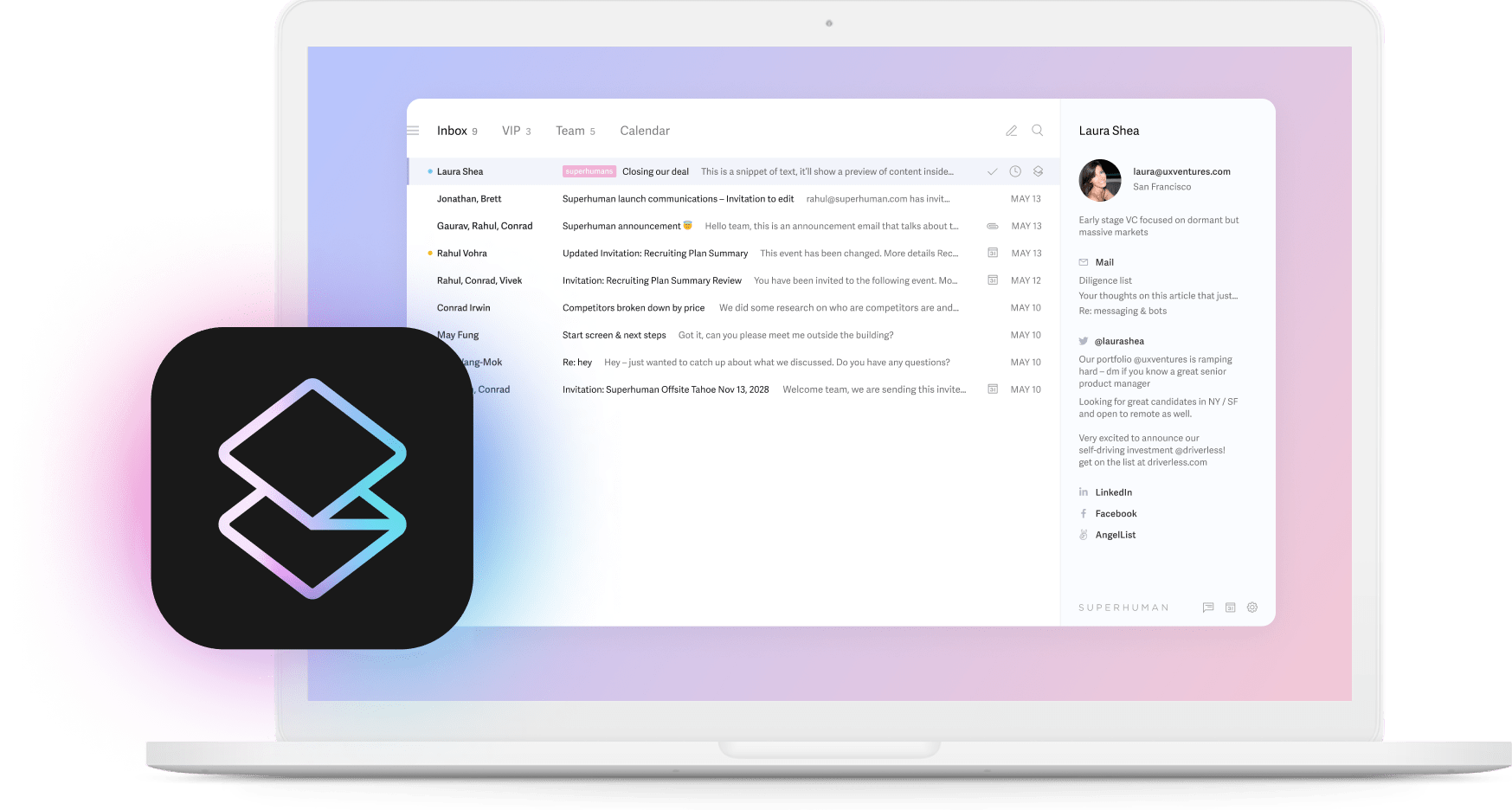
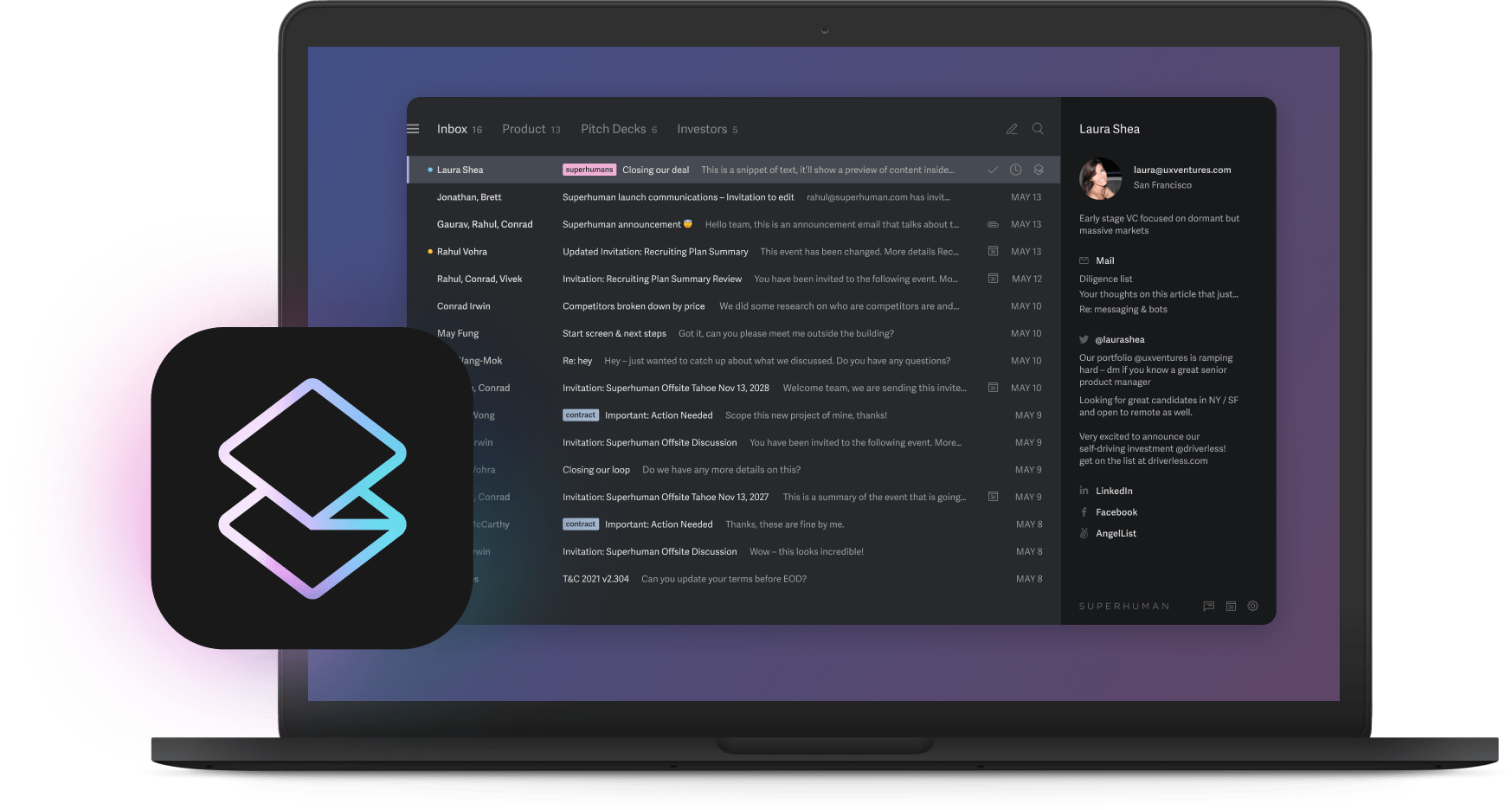
E mail continues evolving with fashionable instruments bridging the hole between conventional e-mail and collaboration platforms. Superhuman Mail transforms e-mail into a strong productiveness device for groups needing to maneuver quick with out lacking vital messages.
Superhuman Mail is a part of a set of productiveness instruments designed to assist professionals work extra successfully.
Alongside instruments like Grammarly for writing help and Coda for collaborative paperwork, Superhuman Mail focuses particularly on making e-mail administration easy. Whereas these instruments serve totally different functions, they share a typical aim: serving to groups talk and collaborate with much less friction.
Key options of Superhuman Mail
- Break up Inbox: Robotically separates vital messages from all the pieces else so you possibly can concentrate on what issues most.
- Immediate Reply: AI-native reply strategies seem straight in your inbox, letting you reply to messages in seconds.
- Auto Summarize: Condenses lengthy e-mail conversations into key factors so you possibly can catch up with out studying each message.
- Learn Statuses: See precisely when and on what machine your emails have been opened, so you already know the proper time to observe up.
- Keyboard Shortcuts: Navigate your total inbox with out touching a mouse, serving to you fly by way of e-mail twice as quick.
For groups utilizing each Slack and e-mail, Superhuman Mail gives the e-mail expertise matching Slack’s pace and effectivity, making e-mail really feel quick and productive somewhat than overwhelming.
Often requested questions
Can Slack change e-mail? No. Whereas Slack can scale back inside e-mail quantity, it may possibly’t change e-mail solely. E mail stays important for exterior communication, formal documentation, cross-organizational coordination, and conditions requiring permanence. They work finest as complementary instruments.
When ought to I take advantage of e-mail as a substitute of Slack? Use e-mail for exterior communications with purchasers or companions, formal documentation requiring permanence, detailed info needing cautious studying, bulletins to giant teams, communications throughout vital time zones, and legally delicate issues.
How do I forestall Slack from being too distracting? Customise notification settings, use Do Not Disturb throughout focus time, set up crew norms round response instances, create clear channel functions, use threaded conversations, and batch Slack checking into particular instances somewhat than sustaining fixed availability.
Ought to leaders reply to Slack messages exterior work hours? Typically no, except really pressing. Responding to non-urgent messages exterior work hours units expectations for fixed availability and contributes to burnout. Use scheduled ship options to compose messages after hours however ship throughout enterprise hours.
What number of Slack channels ought to a crew have? Purpose for the minimal wanted to maintain conversations organized with out creating confusion. Begin with channels for main initiatives, key departments, and some social channels. Create new channels intentionally with clear functions and commonly archive inactive ones.
What’s one of the simplest ways to transition from email-heavy to utilizing each instruments? Begin with clear communication about when to make use of every device. Set up easy guidelines like “Slack for responses wanted inside 3 hours, e-mail for all the pieces else.” Present coaching on finest practices. Lead by instance—managers should mannequin good utilization. Be affected person with the cultural change.
Scale back distractions and save 4+ hours each week with Superhuman!
Keyboard shortcuts, Undo ship, AI triage, Reminders, Lovely design
🚀 Stage up your duties with GetResponse AI-powered instruments to streamline your workflow!

