

🤖 Enhance your productiveness with AI! Discover Quso: all-in-one AI social media suite for sensible automation.
Key takeaways
- Default to asynchronous communication and reserve synchronous time for selections, advanced issues, and relationship constructing
- Construct a documentation-driven tradition that transforms tribal information into searchable institutional reminiscence
- Create a proper communication constitution with response time expectations, device tips, and time zone protocols
- Observe communication effectiveness by consequence metrics like time to resolution relatively than response velocity
- Roll out adjustments regularly with structured phases to keep away from overwhelming your crew
Your crew most likely spans three continents. You get up to dozens of unread emails, and by the point you end your first assembly, that quantity has doubled. Somebody in Singapore wants a choice. Your New York crew is ready on suggestions. Your London colleagues simply went offline for the day.
Workers now spend 57% of their time speaking and solely 43% creating. That may be a full inversion of what productive work ought to appear to be. Studying methods to talk with dispersed groups is crucial when your persons are scattered throughout time zones, and your inbox is chaos. This information exhibits you methods to repair it.
You’ll get confirmed frameworks from firms reaching 95% worker satisfaction and 40% productiveness features, research-backed methods, and communication methods designed for leaders processing 200+ emails every day.
What are dispersed groups?
A dispersed crew is a gaggle of workers who work collectively throughout totally different geographic areas relatively than sharing a single, centralized workspace. Members depend on digital instruments for communication, collaboration, and undertaking coordination. In contrast to conventional co-located groups, dispersed groups function with restricted or no face-to-face interplay and should navigate time zone variations, cultural variation, and technology-dependent workflows.
There are three frequent fashions:
- Distributed groups function with none central workplace, making distant work obligatory by design.
- Distant groups keep headquarters that workers can entry, however select to not use usually.
- Hybrid groups mix obligatory workplace presence with distant flexibility by structured schedules.
Understanding which mannequin your group follows helps you tailor your communication technique. What makes communication uniquely difficult for dispersed undertaking groups? Time zone variations restrict when you may meet, bodily distance eliminates informal conversations, and know-how creates fixed interruptions.
Why getting communication proper issues
Poor communication hits your backside line straight. Managers affect 70% of the variance in crew engagement scores, and supervisor engagement itself has declined from 30% to 27% globally. In the meantime, 68% of workers say they lack sufficient uninterrupted focus time, and information staff now juggle a mean of 11 functions, practically double the six they utilized in 2019. For dispersed groups, the psychological load of selecting the best device for each message provides much more productiveness drag.
However achieved proper, dispersed groups exceed co-located efficiency. GitLab achieved a 40% productiveness improve after going totally distant by constructing communication methods first, then scaling their groups. Dispersed groups unlock 24-hour productiveness cycles, entry to world expertise swimming pools, and retention-boosting flexibility.
These advantages solely materialize while you clear up the communication challenges. With out the fitting frameworks, dispersed groups create chaos as an alternative of aggressive benefit.
7 methods for speaking with dispersed groups
The next methods are drawn from research-backed practices and real-world examples from firms like GitLab, Zapier, and different distributed-first organizations. Implement them so as, or choose those that deal with your crew’s largest ache factors first.
1. Default to asynchronous communication
Asynchronous communication needs to be your default mode for dispersed groups. This implies crew members ship info with out anticipating an instantaneous response, permitting everybody to interact when it matches their schedule and time zone.
When to make use of async vs. sync
Use asynchronous channels for electronic mail dealing with formal communications and detailed info, undertaking administration instruments for job coordination and visibility, shared paperwork for collaborative enhancing, and recorded movies for updates that don’t require speedy response.
Reserve synchronous communication for:
- Actual-time decision-making requiring speedy back-and-forth
- Advanced problem-solving with nuance and ambiguity
- Relationship constructing and psychological security creation
- Pressing issues requiring speedy decision
Set express response time expectations
Doc response time expectations by communication kind and urgency stage. Pressing issues by way of Slack or chat require 2-4 hours throughout working hours, commonplace emails ought to obtain responses inside 24 hours, undertaking administration feedback may enable 48 hours, and non-urgent requests may enable 72 hours.
Talk these requirements organization-wide and embrace them in onboarding supplies, as express documentation of communication norms creates readability about how groups will work collectively.
See async in motion
Here’s a actual situation: Your New York director emails a query at 9 AM EST. With out async protocols, your London crew at 2 PM native time may not reply till tomorrow, relying on workload and priorities. That provides 24 hours to each resolution.
With async-first communication, they discover the documented reply in your crew wiki or go away an in depth response for the director to learn when they’re again on-line, and the choice strikes ahead with out the delay.
2. Construct a documentation-driven tradition
Cease answering the identical questions repeatedly. Documentation transforms tribal information into institutional reminiscence. GitLab maintains 2,000+ pages of documented processes and resolution frameworks, enabling all crew members, no matter location or time zone, to entry an identical info whereas creating institutional reminiscence that transcends particular person availability.
Begin with a centralized system the place you document all selections, assembly outcomes, undertaking progress, and processes in real-time. Make documentation a core efficiency expectation relatively than elective exercise. Create templates for frequent documentation wants like resolution logs, undertaking updates, and assembly notes to cut back friction. Guarantee documentation is searchable and accessible to all related stakeholders.
Sturdy documentation eliminates the necessity for conferences simply to ask “the place did we land on that?” It removes info asymmetry by giving all members equal entry to the data vital for efficient collaboration, no matter location or time zone. Groups that prioritize documentation see sooner onboarding, fewer repeated questions, and higher information retention when workers transition roles or go away the group.
3. Create a proper communication constitution
Main dispersed undertaking groups requires express protocols documented in a proper communication constitution. This constitution creates alignment throughout your group and removes ambiguity about how groups talk.
Your constitution ought to embrace:
- Async-first communication rules, transparency, and documentation expectations
- Response time expectations by channel and urgency stage
- Assembly tips with advance agendas, rotating instances to accommodate time zones, and recording insurance policies
- Instrument utilization tips specifying which instruments serve what functions
- Escalation protocols for pressing issues
Respect time zones
Image this: You’re a VP with engineers in Singapore, designers in London, and gross sales in New York. Singapore’s 9 PM turns into your 9 AM turns into London’s 2 PM. As an alternative of asking Singapore to affix late-night calls continuously, set up core overlap hours when all crew members can be found. Even whether it is simply two hours every day, defend that point for synchronous collaboration.
Rotate assembly instances to distribute inconvenience pretty. If Singapore all the time joins at 9 PM whereas San Francisco joins at 9 AM, resentment builds. Use async electronic mail practices for non-urgent issues. Respect work-life boundaries by avoiding messages throughout colleagues’ nighttime hours. Simply since you are working doesn’t imply they need to be.
Roll out and keep the constitution
Create a proper communication constitution doc together with all important parts, distribute it throughout onboarding, and reference it usually in crew communications. Assessment and replace quarterly primarily based on crew suggestions.
4. Construct belief throughout distance
Belief is the muse that makes each different communication technique work. With out it, async messages get misinterpreted, documentation goes unused, and your constitution turns into shelfware.
Begin with common one-on-ones. These are the one only device for sustaining reference to dispersed crew members. They provide you a personal house to supply help, reply questions, and catch early indicators that somebody feels remoted or disconnected.
Create casual connection alternatives as properly. Digital espresso chats, crew channels for non-work matters, and celebrating achievements publicly all assist replicate the informal interactions that co-located groups get without cost. Gallup’s analysis exhibits that workers with thriving office relationships report 50% increased productiveness in comparison with these with poor relationships.
Acknowledge contributions no matter location. When distant crew members really feel invisible in comparison with office-based colleagues, engagement erodes quick. Ensure that promotions, undertaking assignments, and public recognition are distributed equitably throughout geographies.
5. Use instruments that combine seamlessly
Instrument choice ought to concentrate on lowering communication overhead by automation, integration, and clever routing relatively than including extra channels. Fashionable instruments should get rid of pointless updates by automation and combine to forestall workers from duplicating messages throughout platforms. The shift from particular person device analysis to ecosystem considering represents a big pattern in communication instruments technique.
Match instruments to communication sorts
- Electronic mail works greatest for formal communications, detailed info, and documentation. Keep away from utilizing it for pressing issues or brainstorming classes, and guarantee integration with calendar and undertaking instruments.
- Chat platforms like Slack and Groups excel at fast coordination, async updates, and informal communication. Don’t use them for long-form selections or formal bulletins.
- Mission administration instruments deal with job monitoring, progress visibility, and deadline administration. They don’t seem to be superb for real-time discussions, however integration with all different instruments is crucial.
- Video conferencing fits advanced discussions, crew constructing, and alignment conferences. Skip it for info dissemination and routine updates.
Every device serves a selected objective, so outline these functions clearly in your communication constitution.
6. Observe communication effectiveness
Monitoring the fitting metrics helps you scale back interruptions and enhance crew efficiency. Give attention to outcomes and communication effectiveness, following confirmed frameworks from profitable distributed firms.
Embody evaluation of documentation high quality, async communication readability, and cross-timezone collaboration effectiveness. Keep away from responsiveness metrics that favor synchronous work patterns and drawback async-first staff.
Measure communication effectivity by:
- Time to resolution relatively than time to response
- Documentation completeness: Are selections recorded in a centralized location the place they’re findable with out asking somebody?
- Assembly effectiveness: Did contributors discover synchronous time beneficial, or would async options have labored higher?
Learn statuses get rid of follow-up messages asking “Did you see my electronic mail?” Your crew can see when recipients learn messages with out interrupting their move.
7. Roll out adjustments regularly
Need to rework your crew’s communication with out overwhelming them? A structured rollout works higher than a sudden shift.
Part 1: Audit present patterns
Doc how your crew presently communicates, observe assembly frequency, electronic mail quantity, and response instances. Determine ache factors by nameless surveys and map time zones and core overlap hours.
Part 2: Doc your constitution
Outline async-first rules utilizing the framework above, set response time expectations by channel, and set up assembly tips and power utilization protocols.
Part 3: Implement async options
Launch documentation methods with templates and practice your crew on async communication greatest practices. Introduce async replace codecs like written briefs and recorded movies. Cut back one assembly per week, changing it with async check-ins.
Part 4: Optimize and refine
Collect suggestions on what’s working and what’s not. Regulate response time expectations primarily based on actuality and refine documentation templates. Conduct assembly effectiveness surveys and have a good time early wins publicly.
This phased strategy lets your crew adapt regularly as an alternative of feeling whiplash from sudden adjustments.
Construct the communication system your dispersed crew wants
Efficient communication with dispersed groups requires three basic shifts: defaulting to asynchronous communication, constructing documentation-driven transparency, and establishing express communication protocols by a proper constitution. These aren’t elective extras. They’re the operational basis that allows distributed groups to outperform co-located teams.
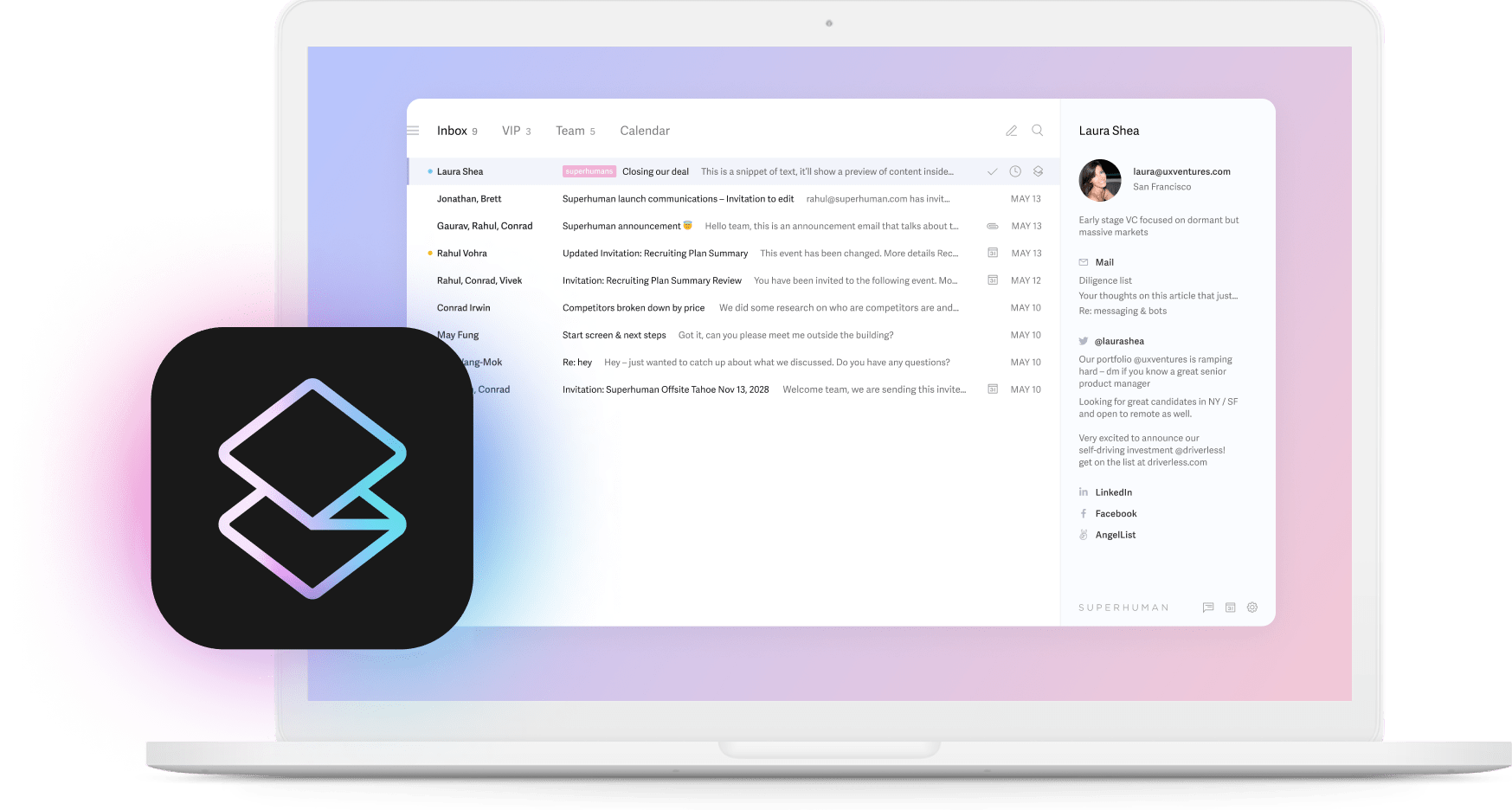
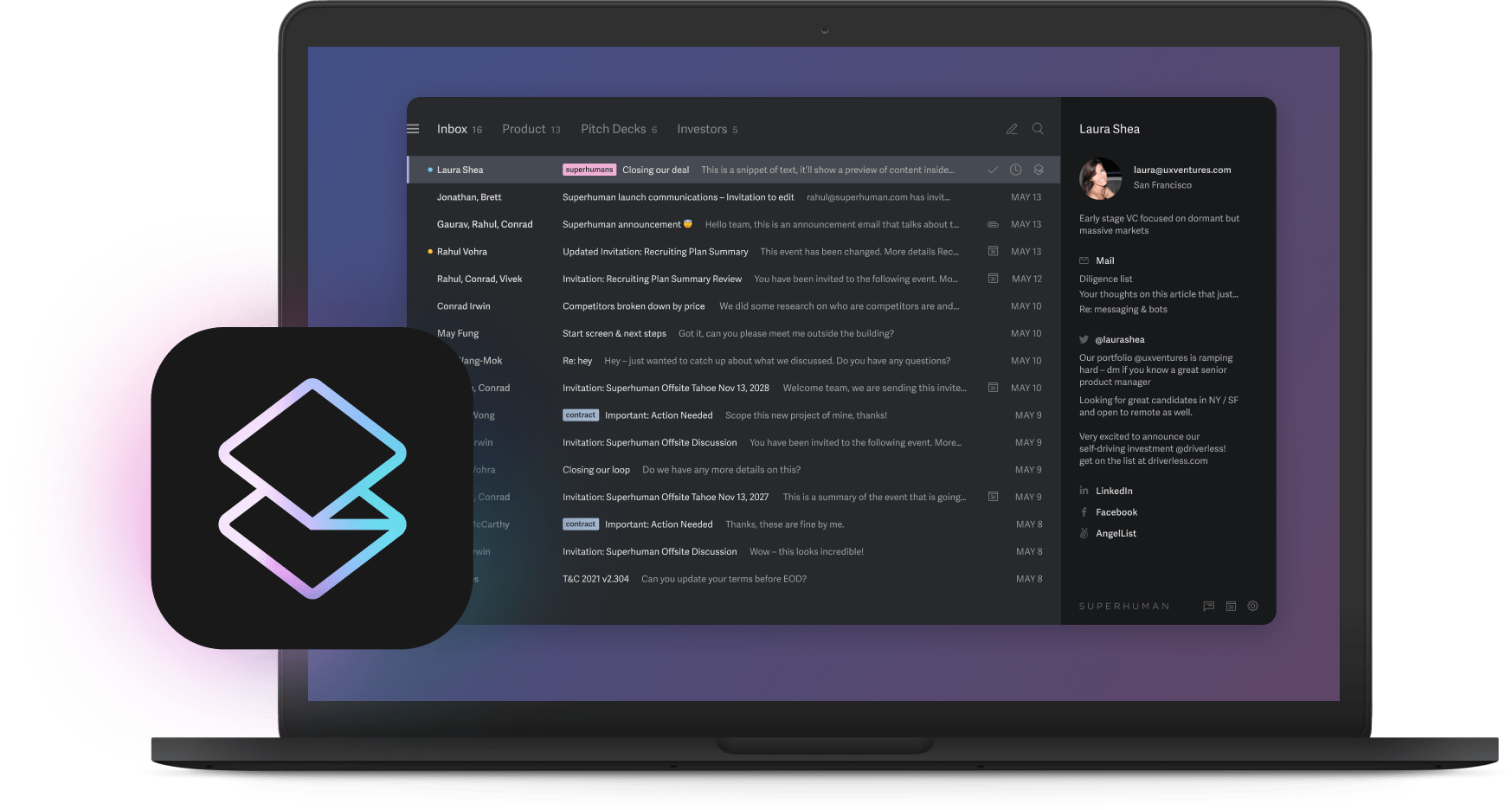
When your crew is drowning in a whole lot of every day messages, instruments that scale back coordination overhead change into business-critical. Superhuman Mail offers you the velocity and visibility to fly by your inbox with out the coordination overhead that kills productiveness.
- Cut up Inbox surfaces your most essential messages mechanically, filtering out the device notifications and newsletters that create digital friction.
- Prompt Reply accelerates response instances, with prospects reporting they write emails twice as quick.
- Auto Summarize shows a one-line abstract above each dialog so you may typically skip studying the total thread.
Attempt Superhuman Mail at the moment and rework how your dispersed crew communicates.
FAQs
What methodology of communication is greatest for distributed crew members?
Asynchronous communication works greatest for distributed crew members as a result of it respects time zone variations and permits deep work with out fixed interruptions. Electronic mail for distant groups handles formal communications, undertaking administration instruments coordinate duties, and recorded movies ship updates with out requiring everybody to be on-line concurrently. Reserve synchronous communication like video requires advanced problem-solving, relationship constructing, and pressing selections requiring real-time dialogue.
What are the 5 C’s of efficient communication?
The 5 C’s of efficient communication are readability, conciseness, coherence, consistency, and completeness. For dispersed groups, readability means stating expectations explicitly since you can not depend on physique language. Conciseness respects colleagues’ time throughout time zones. Coherence ensures messages move logically. Consistency builds belief by predictable communication patterns. Completeness supplies all vital info to keep away from back-and-forth delays.
The right way to handle dispersed groups?
Handle dispersed groups by establishing clear communication protocols, constructing documentation-driven transparency, and creating predictable rhythms for collaboration. Set express response time expectations by channel. Rotate assembly instances to distribute time zone inconvenience pretty. Use undertaking administration instruments for visibility into work progress. Prioritize outcomes over exercise monitoring and belief crew members to ship outcomes relatively than monitoring hours labored.
What are one of the best practices for distributed groups?
Finest practices for distributed groups embrace defaulting to async communication, sustaining complete documentation, establishing core overlap hours for synchronous collaboration, and utilizing built-in instruments that scale back context-switching. Create a proper communication constitution that everybody follows. Construct psychological security by common one-on-ones. Acknowledge contributions publicly no matter location. Guarantee distant staff have equal entry to info and development alternatives as in-office colleagues.
Cut back distractions and save 4+ hours each week with Superhuman!
Keyboard shortcuts, Undo ship, AI triage, Reminders, Stunning design
🚀 Stage up your duties with GetResponse AI-powered instruments to streamline your workflow!

